


Blooming People: Charlotte Meijerink
After finishing high school, Charlotte trained as an interior designer. Then came furniture making in Rotterdam. After that, Spatial Design at the Royal Academy of Art in The Hague. And finally, a master’s degree in Architecture at the Amsterdam Academy of Architecture. No wonder she wears two hats at Blooming Buildings: Head of Design and Architect.
“I’ve always loved nature, but it was during my time at the Academy of Architecture that I really dove into it. I followed studios on green design, biodiversity, and climate adaptation. I explored biobased and demountable construction, but also things like semi-permeable parking spaces that let rainwater drain away.
At the same time, I started questioning the direction of housing development. We’re still stuck on the idea of endless rows of single-family houses. But on one hand, you have young singles in their twenties who can’t find a home, and on the other, people in their sixties living in houses far too big for them. Add to that new neighborhoods where no one is home during the day and space ends up being underused.”
“When I look at my own neighborhood in Rotterdam, I see how it can be done differently. How many people can live close together without losing livability. A big part of that is shared green space, which strengthens social cohesion.
Urban nature is also a buffer against heat stress, flooding, and the loss of biodiversity. We need to wake up—bricks alone won’t solve it. I grew up in Gouda, six meters below sea level. In summer, when it rained hard, you could sometimes paddle a rubber dinghy through the streets.”
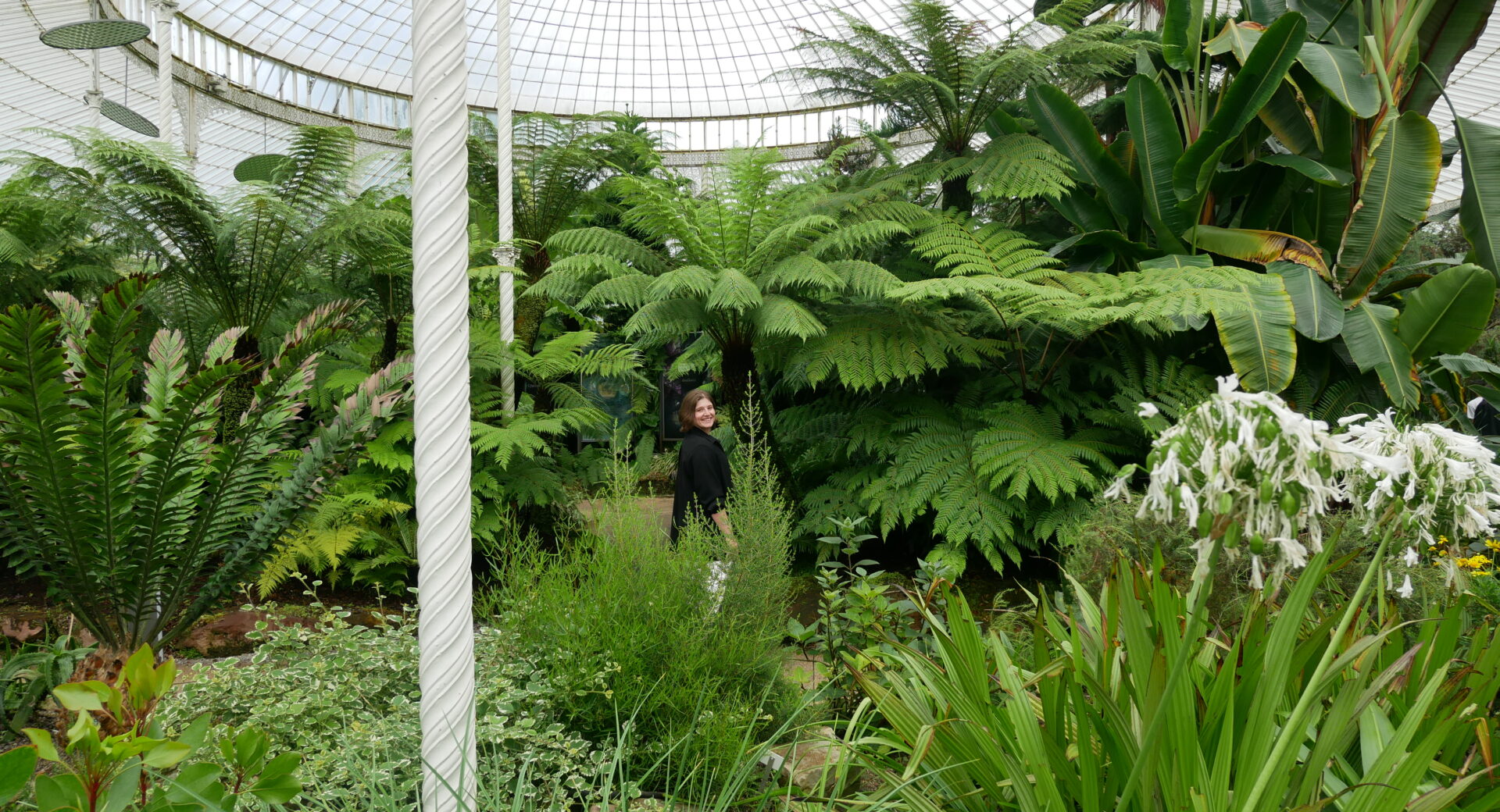
Image: Charlotte in the Botanic Gardens of Glasgow, Scotland
“Never underestimate what greenery does for your mental wellbeing. When I started focusing more on green design during my studies, I also transformed the garden at our little house in Rotterdam. During the pandemic, that garden was my only real source of light: two years behind my laptop at home, but always with a view of it.
I witnessed a miniature bird migration right outside my window. The garden shifted from a barren patch of stones to a place teeming with life. A pigeon that never left. A family of great tits nesting. Dozens of jackdaws and ring-necked parakeets, blending perfectly with the hops they hid in. You’d jump out of your skin sometimes when they suddenly burst into loud chatter as you stepped outside.”
“Even though it’s clear that change is urgent, I still notice how many people see greenery mainly as a problem. They worry about maintenance. Or pests. Or that it might damage their façade. It’s as if people have grown afraid of nature, when in fact it’s exactly what we need.
The way to overcome those fears is by showing what’s possible. There are stunning buildings where vines have been growing up the walls for a hundred years—and the buildings are still in excellent shape. In fact, the greenery even provides natural insulation.
What doesn’t help is that urban greening is too often done poorly and maintained even worse. Without proper knowledge, you risk going against nature—like planting species together that simply can’t coexist. To get it right, you need understanding and insight. If it can work in forests and parks, why not in built-up areas too?”
“Luckily, there’s a small revolution underway. I see it in my own neighborhood: the more urban nature appears, the more people are inspired to take it up themselves. But the real impact lies with public and commercial buildings. By greening schools, offices, municipal buildings, shopping streets, and malls, we can create ecological corridors: green routes for insects and wildlife to move through the city. More and more municipalities are starting to see this too: it’s not just about the parks. There’s a whole world to gain between the municipal park and the small private garden. That’s where Blooming Buildings can play a vital role.
I first encountered Blooming Buildings while working as an interior designer for an architecture firm, designing the entrance of an office building in Amsterdam Zuidoost. Blooming Buildings was brought in for the planting, and it turned out we were a perfect match. We shared the same vision and wanted to create a lush abundance of plants, making the entrance the true eye-catcher of the building. The collaboration went so well that I decided to make the leap. Now I get to combine two passions: architecture and nature.”
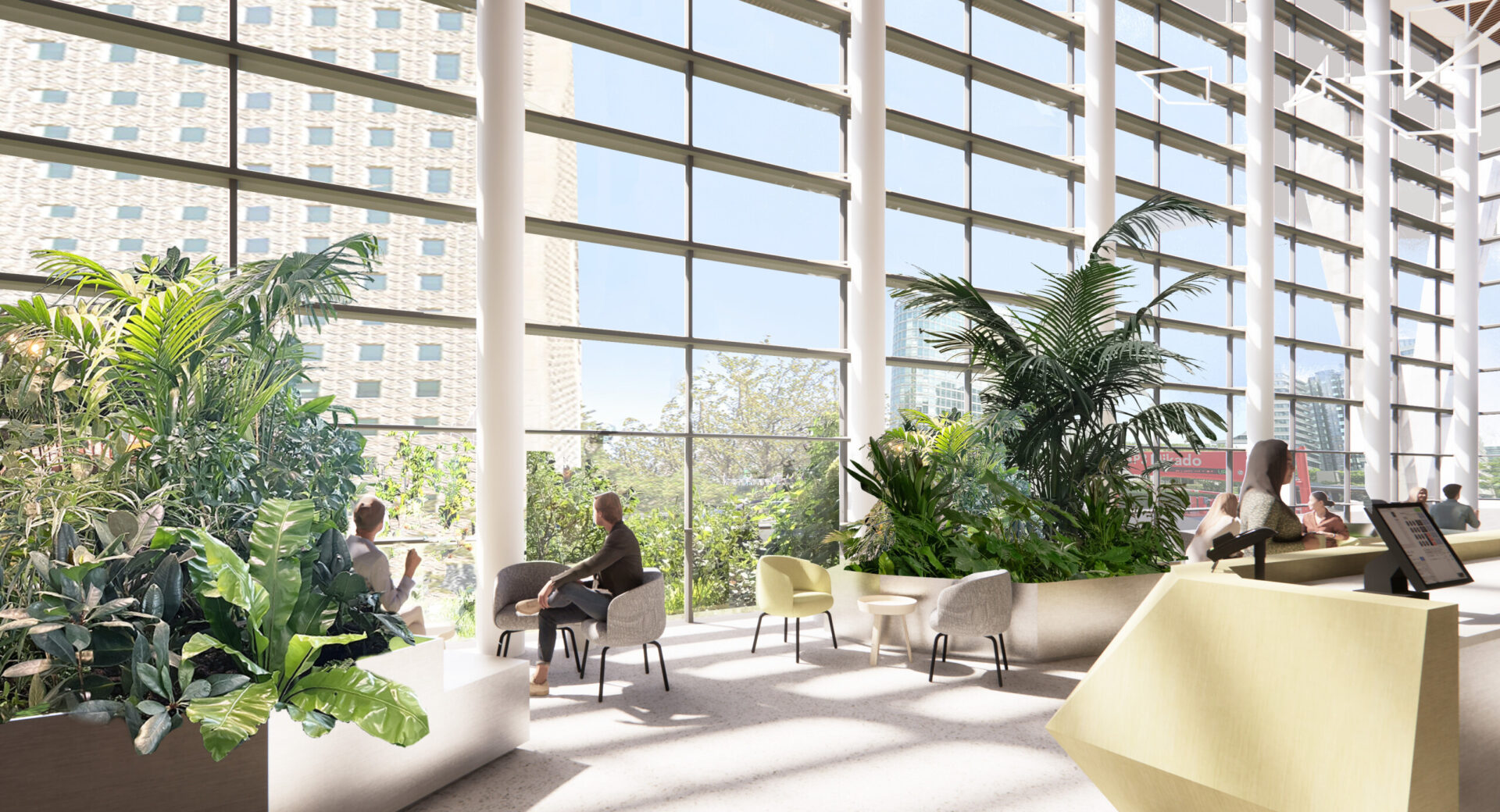
Image: one of the renders for the Entree project in Amsterdam Zuidoost, designed by Charlotte for Cepezed in collaboration with Blooming Buildings
“Thanks to my studies, I bring a unique perspective on how nature and architecture can complement one another. It’s about finding the right balance between architectural and ecological value. I can also speak the same language as other architects, which helps open up the conversation. Instead of separating the building design from the green design, I integrate the two. The earlier we’re brought into a project, the stronger the end result will be. Because nature isn’t just the cherry on top, it’s the filling too.
Of course, this requires a long-term vision. That’s important to keep in mind. At Blooming Buildings, we make sure it looks good right from the start. But over time, it only gets better. For the past hundred years, we’ve worked hard to push nature out of our daily lives. Now it’s time to put in the effort to bring it back. And in the long run, it pays off.
Take my own garden. This April was so warm that everything suddenly exploded into life. The garden doesn’t even need me anymore. Things just keep blooming, growing, climbing on their own. It’s incredible to see.”