


Blooming People: Olivia van Gulik
With her background in architecture and asset management, Olivia is our missing link between real estate and greenery. She sees herself as a chameleon, familiar with the interests and challenges of every stakeholder. Her mission: to show how planting can be an integral solution to a wide range of problems.
“My love for nature is something deeply human: we come from nature, that connection runs deep. But even during my architecture studies, I noticed that what truly made me happy was seeing nature within the built environment. It’s where we live, work, and spend our time — we’re always in it. When you spot a green façade in an otherwise stony setting, you can feel drawn to it instantly. You want to be there. That feeling made me realize that nature in our built surroundings is absolutely essential.
Ultimately, we’re all searching for connection, for places where we feel happy and healthy, where we can meet other people. A place that meets our needs. That’s exactly what fascinates me about bringing nature into the built environment: it’s where everything comes together.
As idealistic as this may sound, I’m actually commercially driven. I’m convinced that things truly take off when there’s a solid business case behind them. In the end, it has to be financially viable. That doesn’t mean it has to pay off immediately, it can also mean being future-proof: investing now to ensure that your property or portfolio meets new demands and expectations down the line.
Every project needs an integrated approach. Take the IJburg shopping center, owned by Achmea. Shopping centers are under pressure: small businesses are disappearing, large chains don’t create atmosphere, and vacancies lead to lost rental income. Beyond that, a shopping center has a social function, it’s a place where people come together. As the owner, you have a responsibility toward the surrounding community. When vacancies increase and the atmosphere declines, the place loses its appeal and ultimately its value. So how do you solve that? Exactly. By adding greenery.
Achmea thought it was a compelling story. There was just one issue: the space in question was public land, owned by the city. So, we initiated and facilitated a collaboration with the municipality. At the same time, we brought other stakeholders on board — the local business association, homeowners’ associations, the housing corporation, and the visitors. All people with their own interests and opinions. How do you get them aligned? How do you address their questions? It’s a complex process, but that’s exactly why it’s so important to look at these challenges in an integrated way.
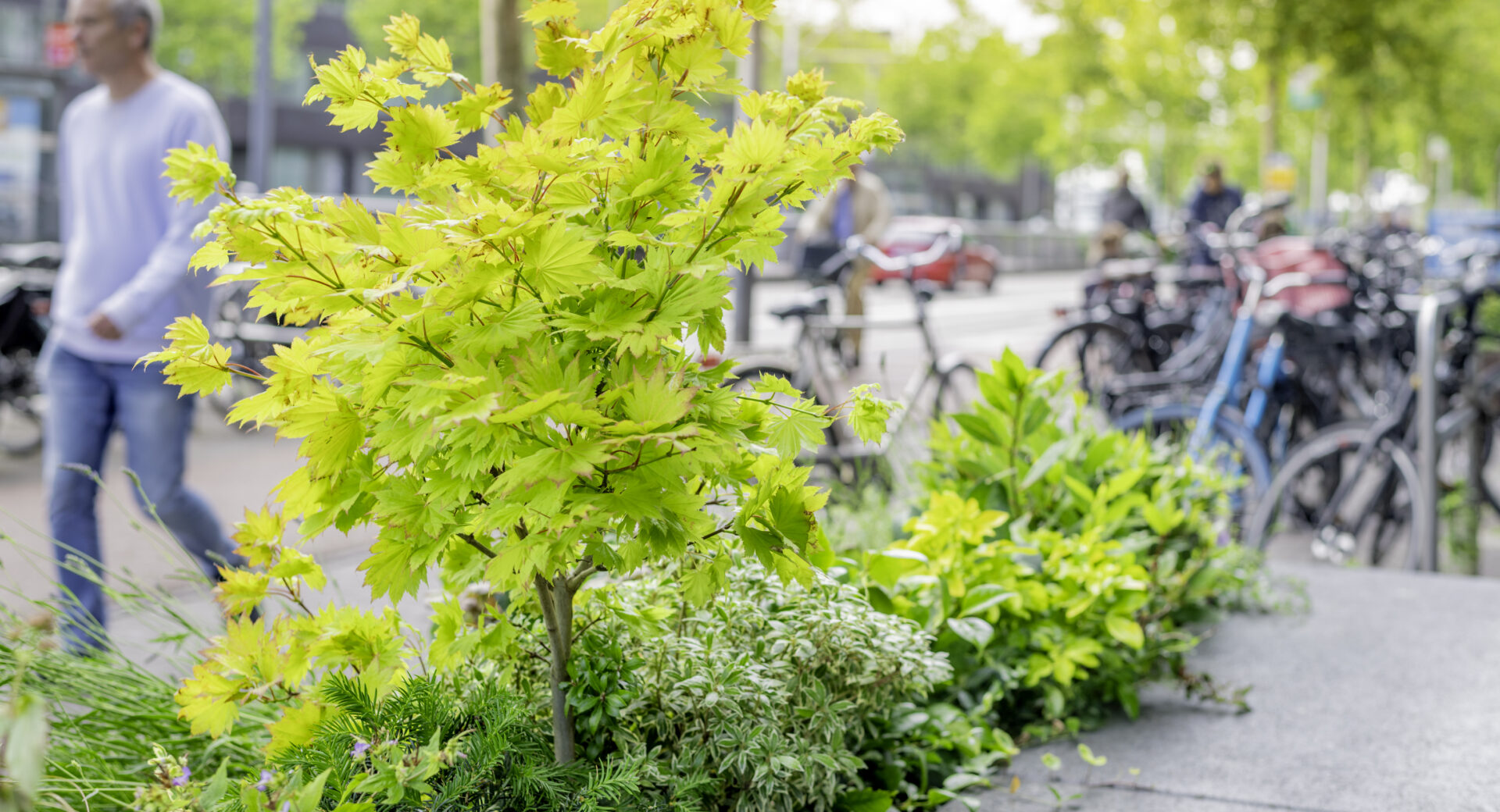
If you don’t take an integrated approach, you can really miss the mark. Recently, I visited the rooftop of a building that prides itself on being green and sustainable. And what did I see? Trees! But to make trees grow on a rooftop, you need a massive layer of soil and a heavily reinforced structure. Which means tons of extra concrete. The CO₂ emissions that come with that are enormous! That can never outweigh the supposed sustainability benefits. Whereas if you use shrubs and other plants, you need far less soil, spend less money, and waste less energy. At the same time, you contribute just as much — or even more — to biodiversity, climate adaptation, and overall experience. That’s what I call truly sustainable.
And there was more. A rooftop park is meant for the people who use the building. You want them to enjoy being there, to meet each other. But in this case, the design made that almost impossible: the paths weren’t wide enough to walk side by side, there were no places to sit, and the access was through a kind of awkward maze of ladders and stairs. To me, that’s money down the drain. It completely misses the goal of developers and investors, who are, by nature, commercially minded.
That’s why you need someone who understands greenery and can think along with the commercial decisions. To end up with something both functional and profitable. That means considering the role of greenery as early as the feasibility phase, and knowing which experts to involve from the start. People tend to think: we’ll deal with that later, when we get there. But that only leads to unnecessary costs.
It also means being flexible. One moment you’re talking to the municipality, the next to an investor or a developer. I have to be able to put myself in each of their shoes. I need to understand their interests and figure out how to align everyone. Sometimes I truly do feel like a chameleon.
Plants Tick All the Boxes
When I started at Blooming Buildings in 2022, I quickly realized how much I enjoyed connecting the language of real estate investors, developers, and users to the world of greening. My first step was to map out the different parties involved: public and private, property owners and users. What sets them apart? What’s their strategy? What obstacles do they face? You can address all of that directly in your business case.
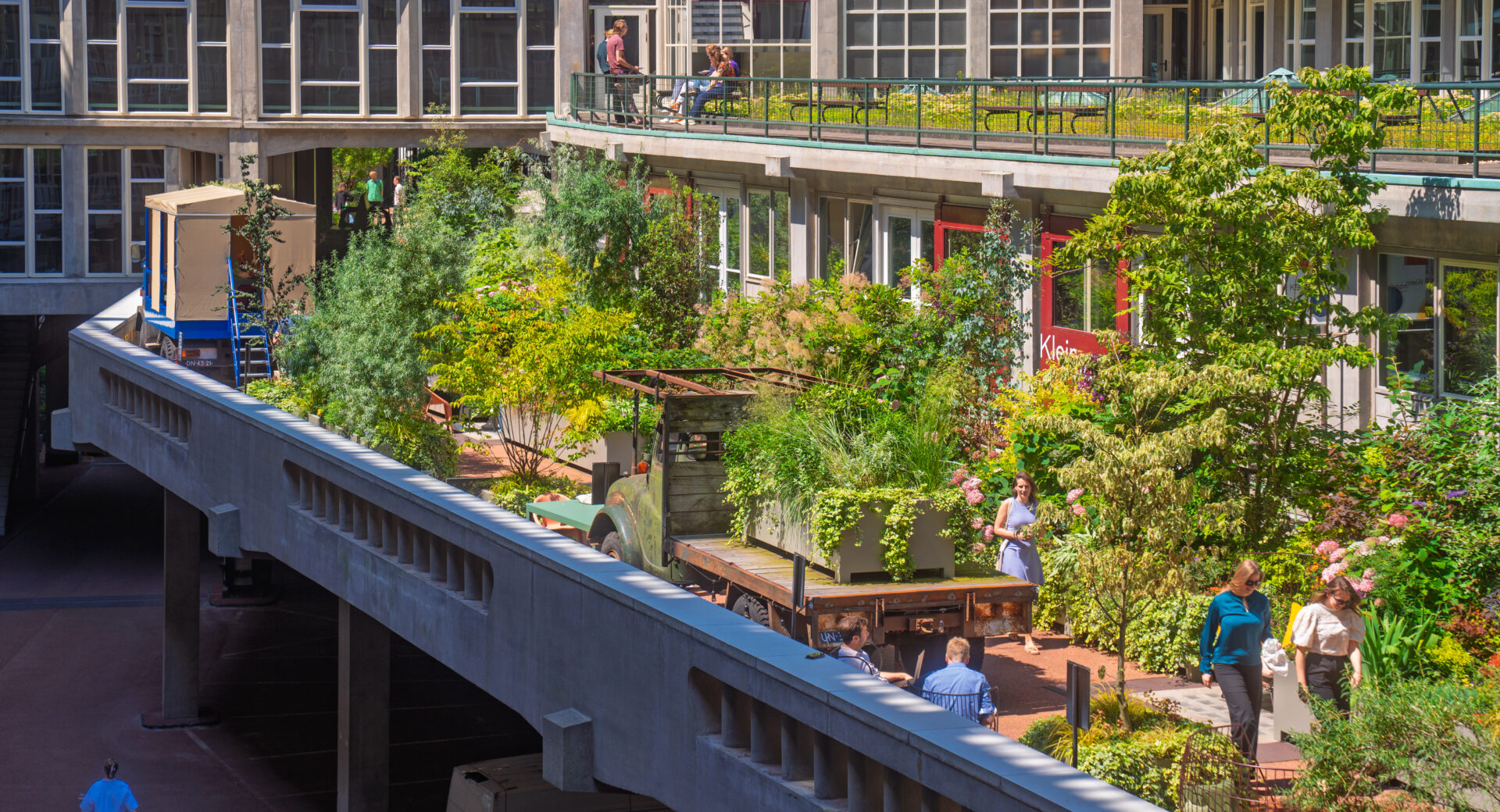
One major project I’ve been involved with from the very beginning is the Groothandelsgebouw, in close collaboration with their project manager. For him, it was crucial to stay within budget and on schedule. That’s when we start digging deeper: Is the building fully leased? Are the tenants satisfied? Does the client have sustainability ambitions? The creation of the Maaskant Park clearly demonstrates that greening attracts tenants and reduces vacancies. That’s also a big part of my role: sometimes the client doesn’t see all the connections that we do. It’s up to me to put those insights on the table and open their eyes.
Because when you look at what greening truly delivers: plants really do tick all the boxes. Health, happiness, aesthetics, biodiversity, heat mitigation, water retention… You name it. They offer solutions to a wide range of current and future challenges. That’s what makes it so fascinating to me: planting is not only incredibly effective, but also commercially attractive.