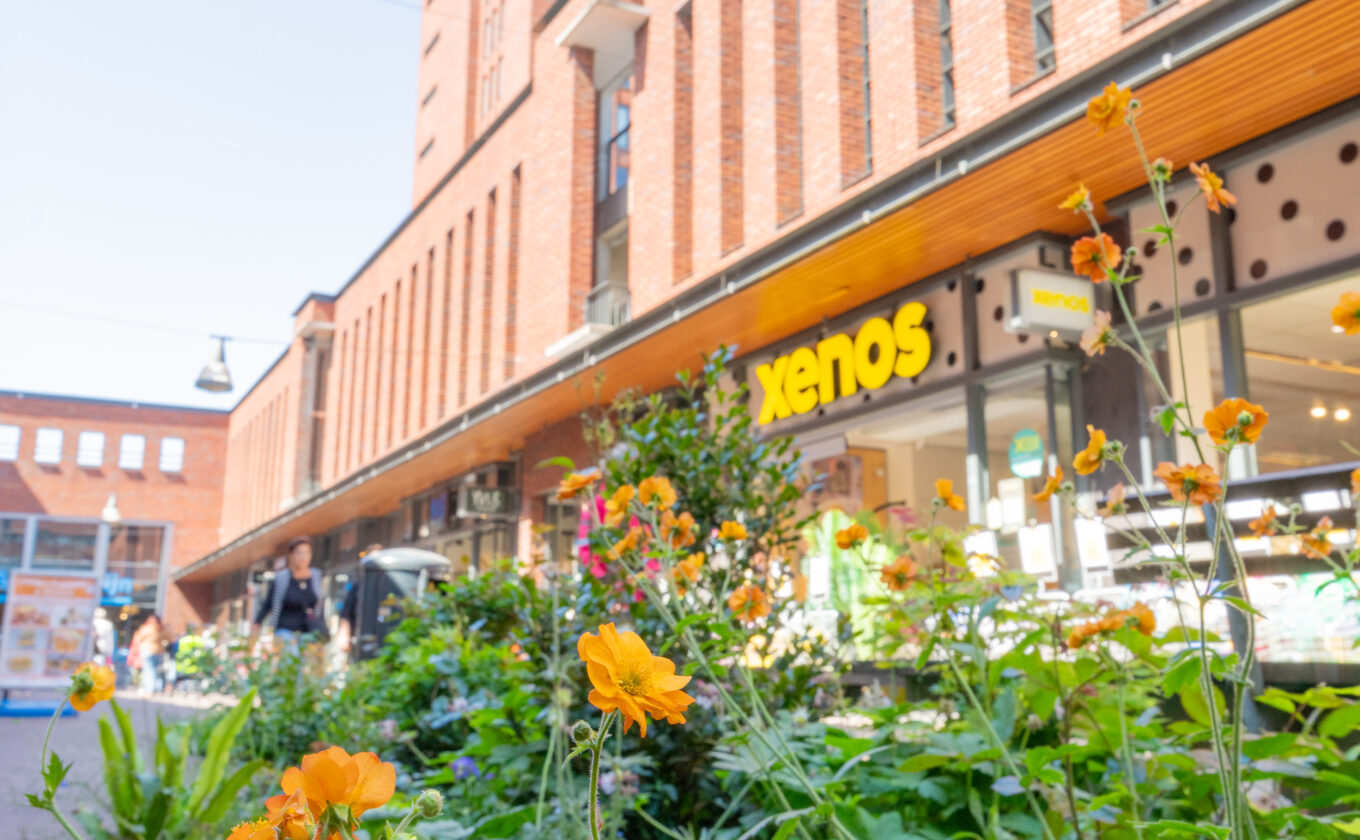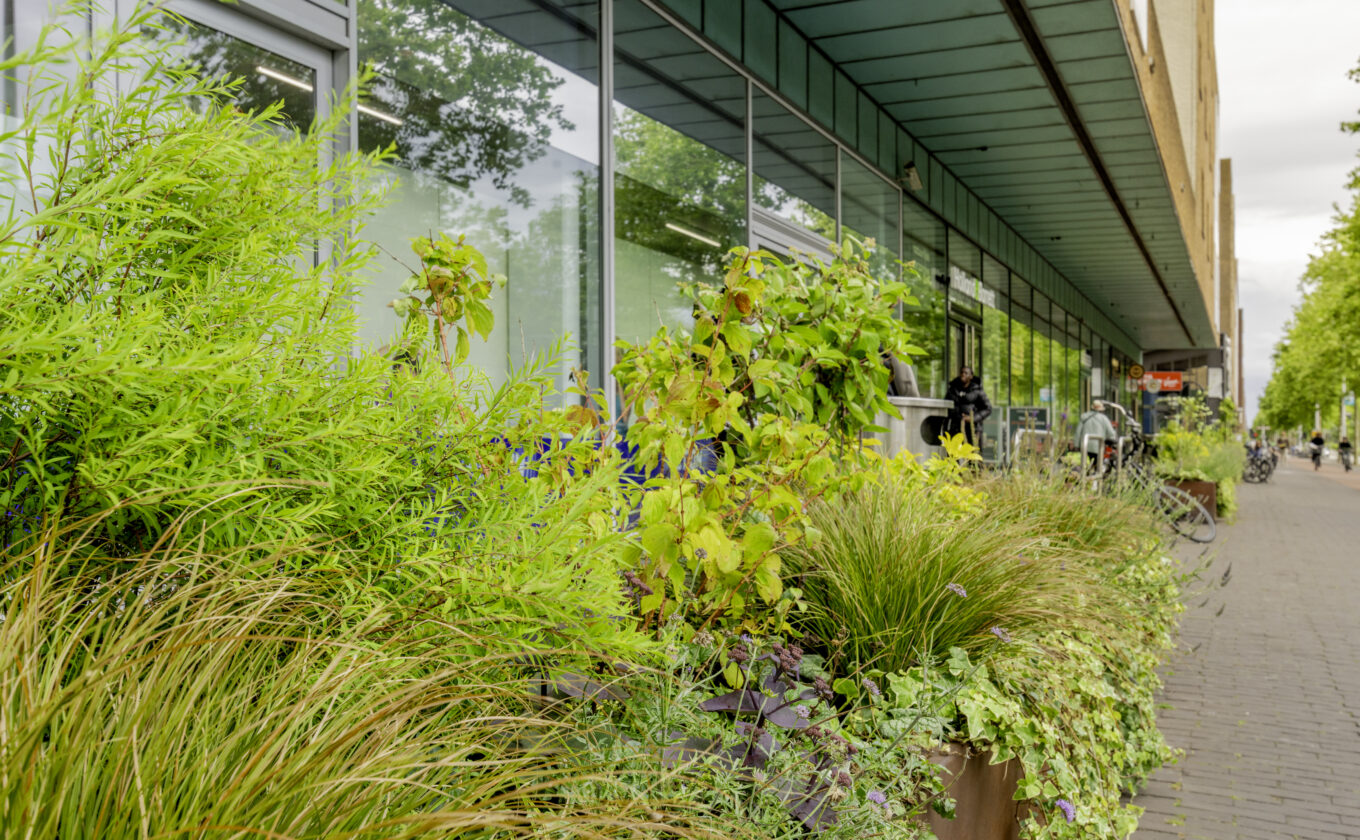

To truly be ready for the future, Dutch shopping centers must drastically green themselves. At the shopping centers of IJburg and Zwolle Zuid, we see the benefits: climate resilience increases, turnover rises, vacancy disappears, and property values go up. In this blog, we explain how it works.
From retail hotspot to meeting place
In recent years, Dutch shopping centers have been forced to transform. Due to the corona crisis and the rise of online services, many fashion stores, travel agencies, and temp agencies disappeared. In their place came hospitality businesses, hairdressers, and social-cultural facilities. Businesses that aren’t dependent on digitalization. This way, many centers have changed from retail hotspots into meeting places.
But many shopping centers still have another problem: they stem from a time when climate change wasn’t even in the dictionary. Now that our summers have more (and longer) heat waves and rain showers are becoming increasingly severe, we can’t possibly ignore the disadvantages of all that stone and concrete. On hot days, shopping centers suffer from heat stress, and during heavy rainfall, the water can’t drain away. As a result, they often still structurally deal with vacancy and disappointing visitor numbers. To truly turn the tide, another metamorphosis is needed: that of radical greening. Because with this, you ensure:
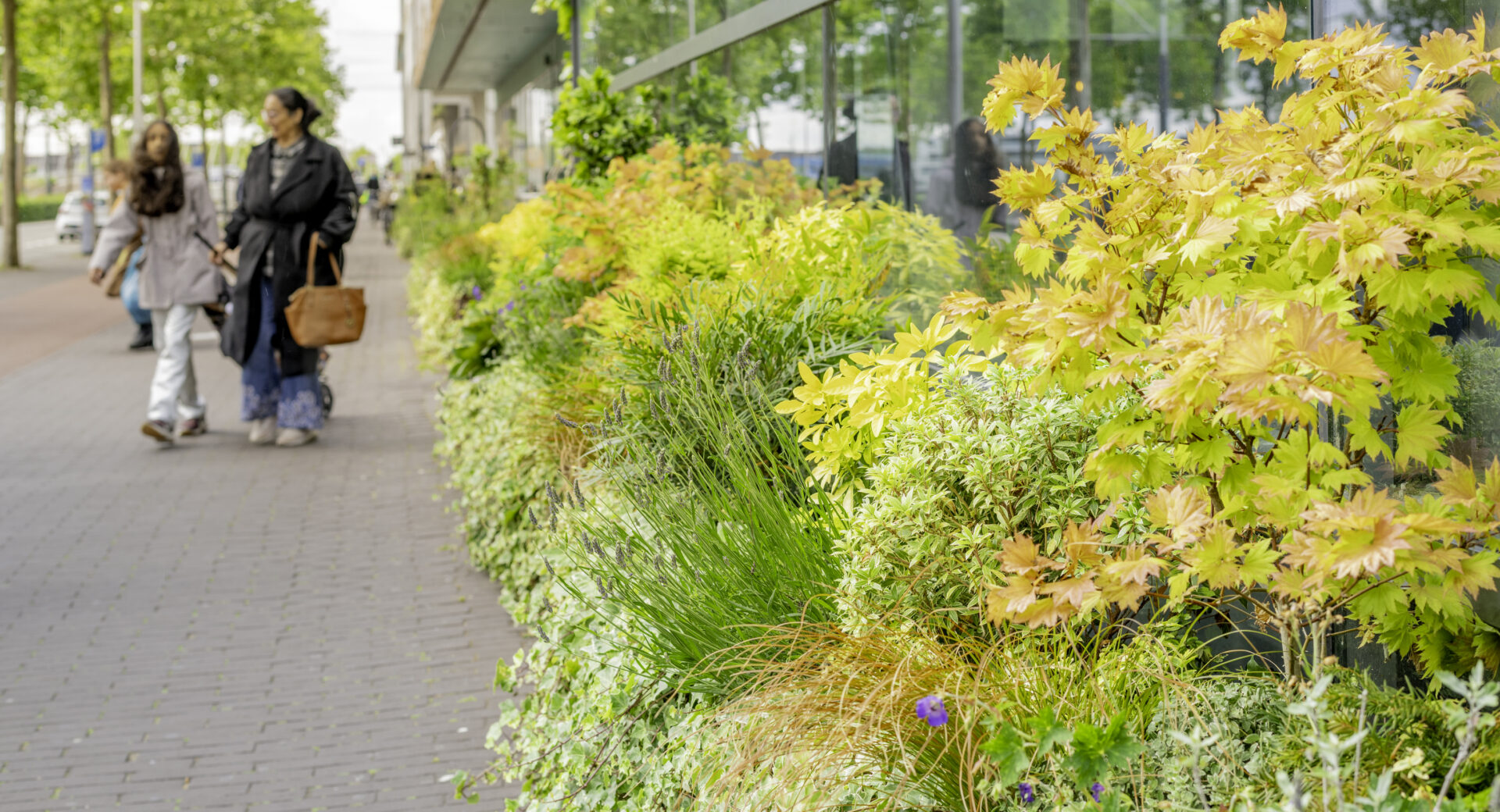
Green provides cooling in summer and captures water during heavy rainfall. You make the most impact by planting trees, but there isn’t always space for that. In that case, you can go a long way with climbing plants, for example by stretching wires over walking areas. During a heat wave, this can make a significant difference. Climbing plants also ensure that facades don’t get as hot, so air conditioners don’t have to work as hard. Additionally, the evaporation from vegetation causes temperatures to drop.
During heavy rainfall, planted borders and mini-parks work like a kind of sponge. By absorbing excess water, they prevent warehouses and parking garages from flooding and suffering serious water damage.
More green creates more turnover
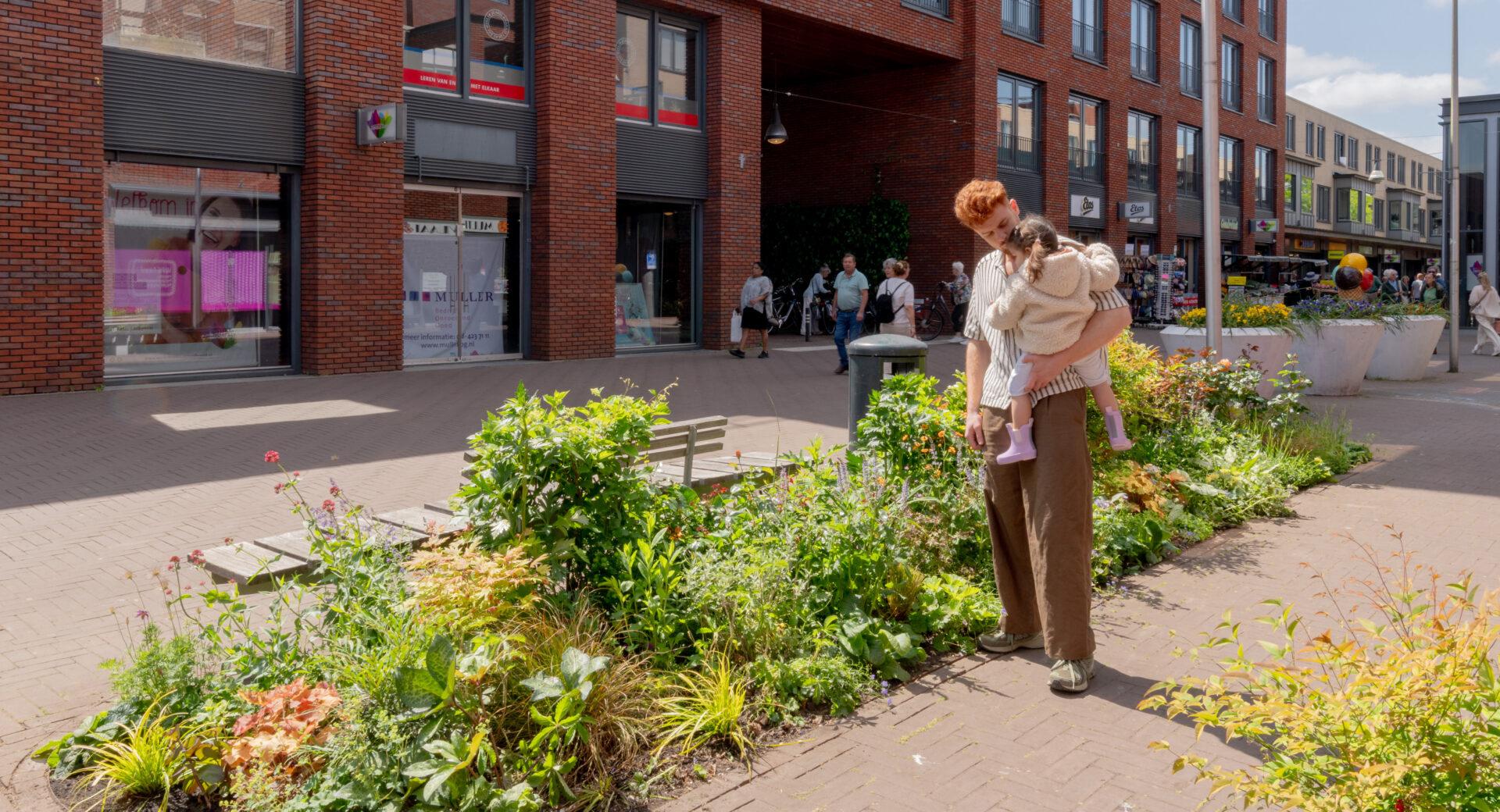
Green makes people happy. When you provide a paved environment with vegetation, you immediately notice it in the people who use it: they come more often and stay longer. With our 3 Blooming Promises for Eye-Catching Vegetation, we ensure a year-round flowering arc, so our projects are visually attractive throughout the year. Our property managers always receive many compliments from shoppers. If you do it right and don’t let it deteriorate, vegetation ensures respectful treatment of the environment.
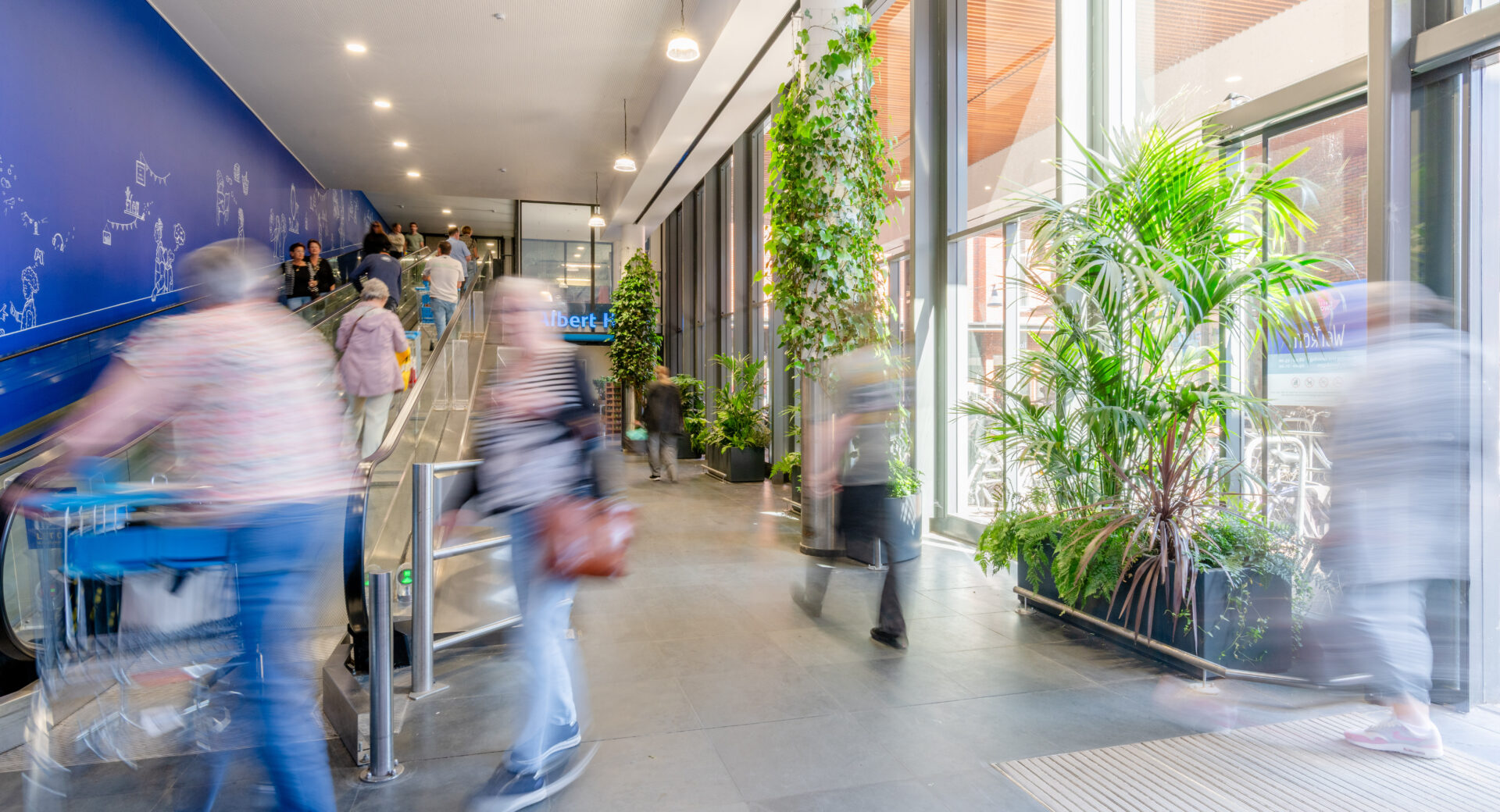
More green creates more biodiversity
Especially in cities, it’s essential to let biodiversity flourish. Shopping centers can play a pioneering role in this. In all our projects, we ensure a healthy, living soil and a great diversity of plants. That by definition gives a boost to biodiversity. For IJburg shopping center, for example, we used 120 different plant species. This increases biodiversity from day one. For real estate parties, increasing biodiversity is extra attractive because you automatically fulfill a CSRD criterion that’s becoming increasingly important.
More green creates more financial value
Due to more frequent climate problems, it’s becoming more expensive to insure shopping centers. Heat stress reduces visitor numbers and water damage must be repaired. When you combine climate adaptation with quality vegetation, greening isn’t a cost item, but an investment. This way, you transform a risk area into a growth diamond where not only climate problems are addressed and biodiversity returns, but where social traffic also increases, commercial attractiveness flourishes, vacancy is solved, and real estate value rises.
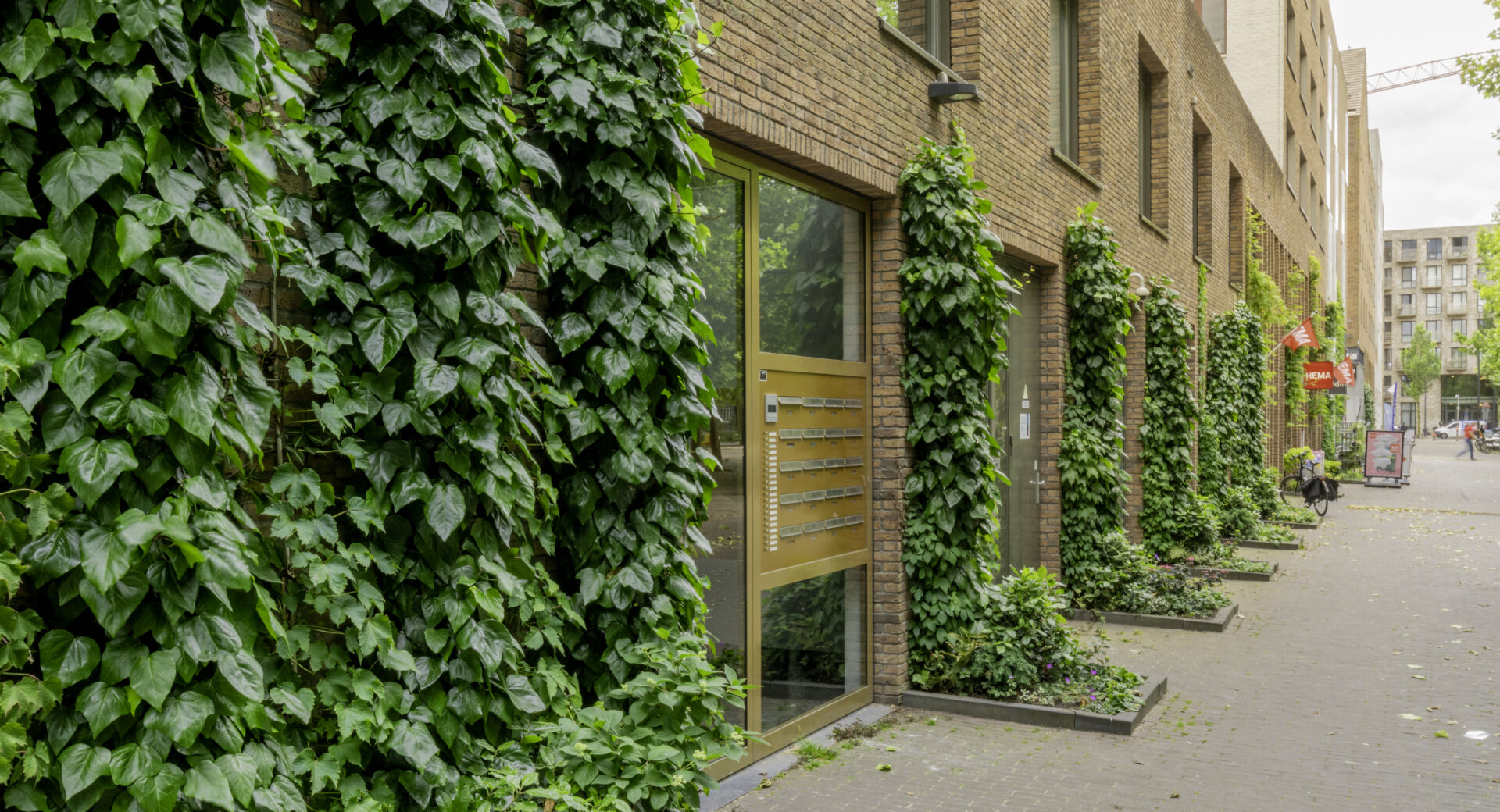
Shopping centers play an important, connecting role for villages, neighborhoods, and urban areas. By working on greening, you improve the experience and stimulate the vitality and livability of the entire environment. Additionally, you make paved areas climate-adaptive and future-proof with greening. Against relatively low investments, vegetation helps increase visitor numbers, improve customer satisfaction, and stimulate economic prosperity. This way, you can make an enormous difference with a relatively modest intervention.